
Pain Relief
Disc Bulge Treatment: Every Option Explained — From Physiotherapy to Surgery
2026-06-10
5 min read

2026-05-05 • 5 min read
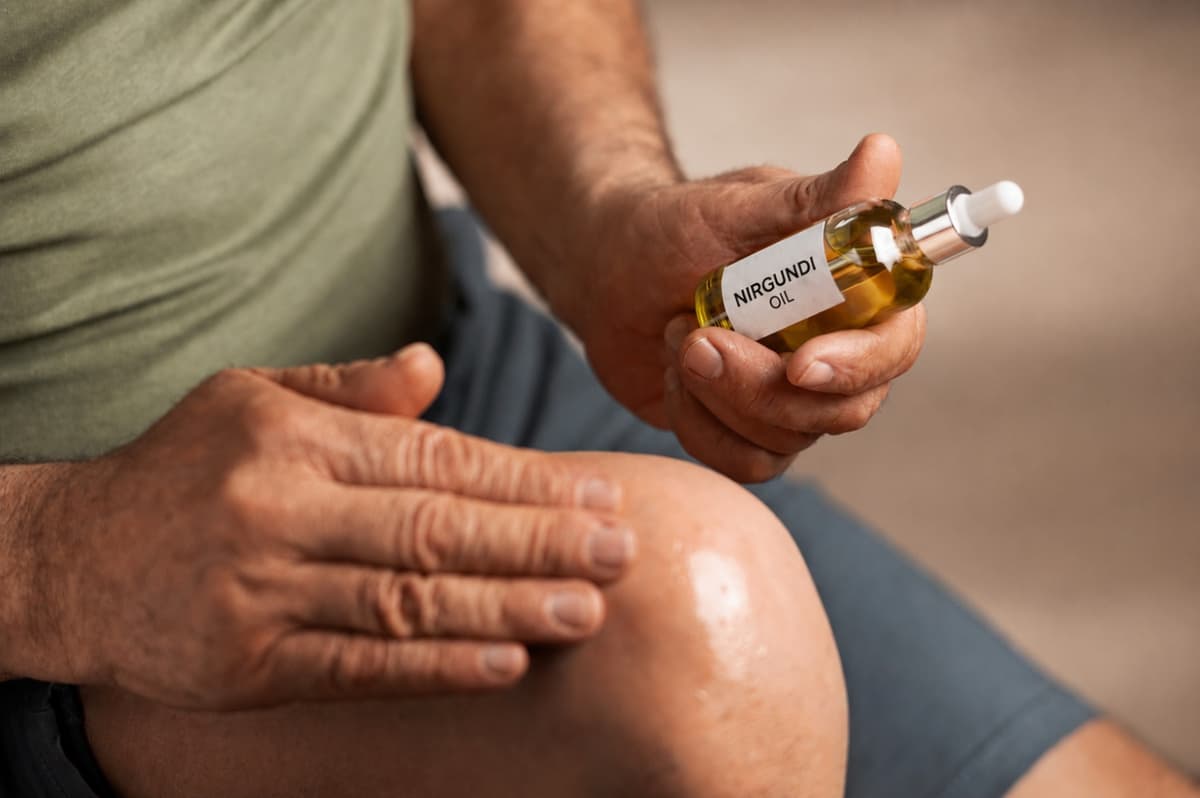
Nirgundi oil is a traditional Ayurvedic pain-relief oil extracted from the Vitex negundo plant. Used for thousands of years, it works by reducing inflammation, easing muscle stiffness, and supporting joint recovery. Its primary nirgundi oil benefits include:
• Relief from joint and rheumatic pain
• Reduction of swelling and localized inflammation
• Muscle relaxation after exertion or injury
• Support for nerve pain, cervical stiffness, and back discomfort
Applied topically 2–3 times daily, it penetrates deeply to address pain at its source — not just mask it.
Joint pain is one of the most common — and most undertreated — health complaints in India. Millions reach for chemical painkillers that address the symptom while ignoring the cause, often accumulating side effects with every dose. But there is an older, wiser answer growing in the foothills and hedgerows of the subcontinent. The nirgundi plant — known botanically as Vitex negundo — has been used in Ayurvedic medicine for over five millennia as one of the most potent natural remedies for pain, inflammation, and nervous system distress. And now, modern phytochemistry is validating what traditional practitioners have long known: nirgundi benefits are real, measurable, and profound.
This guide is for anyone navigating joint discomfort, muscular stiffness, or chronic inflammatory pain — and for anyone who wants to understand not just what nirgundi oil does, but why it works at a biological level. Whether you are dealing with arthritis, a stiff neck from desk work, post-workout soreness, or the dull ache of a back that never quite recovered, nirgundi oil may be the missing element in your recovery toolkit. Let us break down the science, the tradition, and the practical steps to put it to work for you today.
Ashwagandha, turmeric, and tulsi have all had their moment in the global wellness spotlight. Nirgundi deserves the same recognition — and arguably more so, given its remarkable specificity for musculoskeletal and neurological pain. Part of why it has stayed in the background is that its benefits are intensely localized and topical, making it less photogenic as a supplement capsule and more powerful as a therapeutic oil. In Ayurvedic texts including the Charaka Samhita and Sushruta Samhita, Nirgundi is listed among the Dashapushpa — a group of ten sacred healing plants — and is described as superior for conditions involving Vata and Kapha aggravation, which broadly maps to inflammatory joint disease, neuromuscular dysfunction, and oedema.
Nirgundi (Vitex negundo) is a large aromatic shrub native to South and Southeast Asia, growing abundantly across India, Sri Lanka, Nepal, and parts of China. It belongs to the mint family (Lamiaceae) and can grow up to five meters in height, producing distinctive five-fingered leaves — hence one of its common names, the five-leaved chaste tree. The plant flowers in blue-purple clusters and produces small dark fruits. Every part — leaves, roots, seeds, and bark — has documented medicinal applications, but it is the leaves and young twigs that are most commonly used in preparing nirgundi oil, through a process of decoction and infusion in a base oil such as sesame or coconut.
Traditional Ayurvedic practitioners used nirgundi leaves as poultices, smoked them for respiratory conditions, boiled them for steam inhalation, and prepared medicated oils for joint and nerve conditions. The name itself — Nirgundi — is derived from Sanskrit and translates loosely as 'that which protects the body from disease.' It is a name the plant has earned many times over.
In Ayurvedic pharmacology (Dravyaguna), nirgundi holds a distinguished place. Its taste profile (Rasa) is bitter, pungent, and astringent — three qualities that collectively support its anti-inflammatory, antimicrobial, and tissue-drying actions. Its inherent energy (Virya) is heating, which enables it to penetrate deeply into tissue layers and dispel the cold, damp quality associated with Kapha-driven swelling. Its post-digestive effect (Vipaka) is pungent, reinforcing its ability to clear stagnation and restore flow in affected channels (Srotas). Most critically for joint and pain applications, nirgundi is classified as both Shothahara (anti-inflammatory) and Vedanasthapana (pain-relieving) — a dual action that makes it uniquely suited for conditions where inflammation and pain co-exist.
The therapeutic efficacy of nirgundi is not merely traditional lore — it is increasingly supported by contemporary phytochemical and pharmacological research. The plant's leaves are rich in flavonoids including vitexin, isovitexin, and casticin, as well as iridoid glycosides such as agnuside. These compounds have demonstrated multiple anti-inflammatory mechanisms: they inhibit pro-inflammatory enzymes including COX-2 and lipoxygenase (the same enzymes targeted by common NSAIDs), suppress the production of inflammatory cytokines such as TNF-alpha and IL-6, and modulate the NF-κB pathway — a master regulator of the inflammatory response. Crucially, they achieve this without the gastrointestinal damage associated with pharmaceutical anti-inflammatories, because they do not deplete the protective prostaglandins that line the stomach wall.
Luteolin, another key flavonoid in nirgundi, has shown neuroprotective and analgesic properties in preclinical studies, helping to explain why nirgundi oil is particularly effective for pain that has a nerve component — sciatica, cervical radiculopathy, and peripheral neuropathy. When applied topically in an oil medium, these active compounds are absorbed transdermally, bypass the digestive system, and act directly on the inflamed or painful tissue beneath.
While nirgundi oil for joint pain is its most well-known application, the full scope of nirgundi oil uses extends considerably further. It has been used for muscular spasms and cramps, sports-related injuries, post-operative swelling, cervical stiffness, headache arising from neck tension, and even skin conditions with an inflammatory component. Its antimicrobial properties — documented against both bacterial and fungal organisms — make it a traditional choice for minor wounds and infections as well. If you are experiencing headaches with a cervical or tension origin, the guide at reset.in/blog/ayurvedic-medicine-for-headache offers useful context on Ayurvedic approaches to head pain that often involve nirgundi-adjacent formulations.
•Apply the oil or emulsion directly over the affected joint, muscle, or spine segment
•Use gentle circular motions for 3 to 5 minutes to enhance absorption and promote local blood flow
•For best results, apply after a warm shower or bath when skin pores are open and receptive
•Use 2 to 3 times daily — morning before activity, midday if needed, and evening before rest
•Allow the oil to absorb for at least 20 to 30 minutes before covering with clothing
•For chronic joint conditions, consistent daily use over several weeks yields the best cumulative results
•Do not apply to broken skin, open wounds, or mucous membranes
Arthritis — whether osteoarthritis, rheumatoid arthritis, or the Ayurvedic equivalent Amavata — involves chronic joint inflammation that progressively degrades cartilage and bone. Nirgundi oil addresses this at multiple levels. Its flavonoids inhibit the inflammatory enzymes that drive cartilage breakdown. Its warming Virya promotes circulation in the periarticular tissues, reducing the accumulation of inflammatory fluid that causes swelling. And its analgesic compounds reduce the sensitivity of pain receptors in the affected joint, providing relief that is both immediate and, with consistent use, cumulative. Clinical observations from Ayurvedic practice consistently record improvements in morning stiffness, joint mobility, and pain intensity scores with regular nirgundi oil application — making it a meaningful complement to any broader arthritis management plan.
For a full understanding of how arthritis progresses and what each stage demands, see our detailed guide on what are the 4 stages of rheumatoid arthritis, and for knee-specific concerns explore reset.in/blog/what-causes-knee-pain-in-females.
Athletes and physically active individuals are among the most immediate beneficiaries of nirgundi oil. Intense exercise creates micro-tears in muscle fibers and triggers localized inflammation as part of the repair process — the mechanism behind delayed onset muscle soreness (DOMS). Nirgundi oil's anti-inflammatory and antispasmodic properties accelerate this recovery phase, reducing soreness duration and improving next-session readiness. For nerve pain — particularly sciatica, which involves the irritation of the sciatic nerve along its path from the lower back through the buttock and leg — nirgundi's luteolin content offers neuroprotective support that few other topical botanicals can match. If back pain is part of your picture, reset.in/blog/what-causes-back-pain is an essential read to understand whether the root cause is muscular, structural, or inflammatory.
Cervical spondylosis — the age-related degeneration of the cervical spine — affects a significant proportion of working-age adults in India, particularly those with desk-bound occupations. The combination of vertebral degeneration and surrounding muscle tension creates a pain pattern that is simultaneously structural and inflammatory. Nirgundi oil, applied along the cervical spine and upper trapezius muscles, addresses both components: reducing the inflammatory response in the affected tissues while relaxing the surrounding musculature. When used regularly as part of a cervical care routine, it can meaningfully reduce the frequency and intensity of cervical pain episodes. For a deeper dive into Ayurvedic cervical care, reset.in/blog/best-ayurvedic-treatment-for-cervical-spondylosis provides a comprehensive treatment framework. Period-related pelvic and abdominal pain is another area where nirgundi's antispasmodic properties are traditionally applied — see reset.in/blog/best-ayurvedic-remedies-for-period-pain for more.
Traditional nirgundi oil is effective, but its thick, heavy texture and strong herbal scent present practical barriers to daily use — particularly for working professionals, travelers, or anyone who needs discrete, on-the-go pain relief. Modern herbal formulation science addresses this with emulsion technology: a process that reduces herbal active compounds to nano-sized particles, dramatically increasing their surface area and transdermal absorption rate. An emulsion carries the same botanical actives as a traditional oil, but delivers them faster, more evenly, and with a lighter skin feel. This is not a compromise on efficacy — it is an upgrade in delivery.
At Reset, the formulation philosophy is rooted in combining traditional botanical wisdom with modern delivery science. The RESET Easy-to-Rub Emulsion brings together Nirgundi and Wintergreen — two botanicals with complementary mechanisms. Nirgundi addresses the inflammatory and neurological dimensions of pain through its flavonoid complex, while Wintergreen (Gaultheria procumbens) contributes methyl salicylate, a naturally occurring compound with powerful analgesic and counter-irritant properties that enhance blood flow to the applied area. Together, they create a synergistic topical solution that is greater than the sum of its parts.
The formulation is delivered in a roll-on format that requires no hands, leaves no grease, and contains zero preservatives, harsh chemicals, or artificial fragrance — designed to be used freely as part of your daily routine without hesitation. Whether you are managing chronic joint inflammation or simply recovering from a demanding day, the RESET Easy-to-Rub Emulsion brings the power of nirgundi to you in its most practical, modern form. Apply gently in a circular motion over the affected area 2 to 3 times a day.
•Nirgundi (Vitex negundo) is a clinically significant Ayurvedic herb with documented anti-inflammatory, analgesic, antispasmodic, and neuroprotective properties — not simply a folk remedy.
•Its key active compounds — vitexin, casticin, luteolin, and agnuside — inhibit the same inflammatory pathways targeted by NSAIDs, but without gastrointestinal side effects.
•Nirgundi oil benefits span joint pain, arthritis, muscle recovery, nerve pain, cervical stiffness, and back pain — making it one of the most versatile topical botanicals in the Ayurvedic pharmacopoeia.
•Consistent daily use delivers the best results. Topical application 2 to 3 times per day over several weeks produces measurable improvements in pain levels, stiffness, and mobility.
•Modern emulsion technology significantly enhances the absorption and practicality of nirgundi-based formulations, making them suitable for active, daily use without the messiness of traditional oil.
•Combining nirgundi with Wintergreen — as in the RESET Easy-to-Rub Emulsion — creates a synergistic analgesic effect that addresses both the inflammatory and circulatory dimensions of joint pain simultaneously.
•Nirgundi works best as part of a holistic plan that includes appropriate movement, anti-inflammatory nutrition, stress management, and — where needed — medical supervision.
Nirgundi (Vitex negundo) is used primarily as a natural anti-inflammatory and analgesic in Ayurvedic medicine. Its most well-documented applications include relief from joint and rheumatic pain, muscle spasms, nerve pain, cervical stiffness, back pain, swelling, and headaches with a musculoskeletal origin. It is used in various forms — medicated oil, leaf poultice, steam inhalation, and in modern topical emulsions.
Nirgundi oil benefits joint pain through several complementary mechanisms: it inhibits pro-inflammatory enzymes (COX-2, lipoxygenase), reduces inflammatory cytokines in the periarticular tissue, promotes local circulation to flush out inflammatory by-products, relaxes surrounding musculature, and provides analgesic relief through neuroprotective flavonoids such as luteolin. The cumulative effect is reduced stiffness, improved range of motion, and sustained pain reduction with consistent use.
Yes. Nirgundi oil is well-suited to daily use. In traditional Ayurvedic practice, medicated oils are applied once or twice daily as part of a self-care routine (Dinacharya). For chronic joint conditions or muscular recovery, applying 2 to 3 times daily is standard and safe. In modern formulations such as roll-on emulsions, daily use is designed into the product format — making it easy to maintain the consistent application that delivers the best long-term results.
Nirgundi oil is generally well-tolerated across skin types. However, as with any herbal preparation, a patch test before first use is advisable — apply a small amount to the inner wrist, wait 24 hours, and check for any reaction. Individuals with known sensitivity to plants in the Lamiaceae family should use with extra caution. Avoid application on broken skin, open wounds, and mucous membranes. If you are pregnant, breastfeeding, or on medication, consult a healthcare professional before beginning regular use.
Nirgundi leaves are the raw plant material used in multiple traditional preparations — poultices, steam, decoctions, and as the active ingredient in oil infusion. Nirgundi oil is prepared by processing the leaves and twigs in a base oil (traditionally sesame) using heat, which extracts and concentrates the fat-soluble active compounds for topical application. Nirgundi oil is thus a more concentrated, shelf-stable, and skin-absorbable delivery form of the same botanical actives present in the raw leaves.
Both forms have value, but for arthritis specifically, nirgundi oil (or a nirgundi-based emulsion) is the more practical and effective choice. Oil-based formulations allow the active compounds to penetrate deeper into joint tissue via transdermal absorption, with prolonged contact time and sustained release of actives. Leaf poultices provide more immediate surface-level relief and can be useful for acute swelling. For a daily long-term protocol, a quality nirgundi oil or emulsion is the recommended form — especially when formulated with complementary botanicals such as Wintergreen for enhanced analgesic action.
Explore these related guides for a deeper understanding of pain, inflammation, and Ayurvedic recovery:
→ What Causes Back Pain — A Complete Guide
→ Best Ayurvedic Treatment for Cervical Spondylosis
→ What Causes Frozen Shoulder: Signs, Stages & Recovery
→ What Causes Knee Pain in Females
→ Abdominal and Stomach Pain Guide
→ Ayurvedic Medicine for Headache
Share this article:
An easy to apply potent formula with roll-on massager

₹549.00
₹449.00
A 2X more powerful formula for enhanced relief.

₹799.00
₹649.00
| Property | Detail |
|---|---|
| Botanical Name | Vitex negundo Linn. |
| Common Names | Nirgundi (Sanskrit), Five-leaved chaste tree, Sambhalu (Hindi), Nochi (Tamil) |
| Plant Family | Lamiaceae (Mint family) |
| Parts Used | Leaves, roots, seeds, bark — leaves and twigs most commonly used for oil extraction |
| Taste (Rasa) | Bitter (Tikta), Pungent (Katu), Astringent (Kashaya) |
| Potency (Virya) | Hot (Ushna) — penetrating and warming |
| Post-Digestive Effect (Vipaka) | Pungent (Katu) |
| Dosha Action | Pacifies Vata and Kapha; mildly stimulates Pitta |
| Primary Therapeutic Category | Shothahara (anti-inflammatory), Vedanasthapana (analgesic), Krimighna (antimicrobial) |
| Key Active Compounds | Vitexin, isovitexin, casticin, agnuside, luteolin, p-hydroxybenzoic acid |
| Use Area | What Nirgundi Oil Does | Who Benefits Most |
|---|---|---|
| Joint Pain & Arthritis | Reduces synovial inflammation, eases stiffness, improves range of motion | Arthritis patients, elderly, those with rheumatic conditions |
| Muscle Recovery | Relaxes muscle spasms, reduces delayed onset soreness, supports tissue repair | Athletes, gym-goers, physically active individuals |
| Back & Cervical Pain | Penetrates deep tissue layers to ease nerve compression and vertebral tension | Desk workers, people with cervical spondylosis or lumbar issues |
| Nerve Pain (Neuralgia) | Analgesic action on peripheral nerves; reduces burning or shooting pain | Sciatica sufferers, diabetic neuropathy cases |
| Post-Injury Swelling | Anti-edemic properties reduce localized puffiness around injured joints | Post-sprain or post-surgery recovery (with medical guidance) |
| Headache & Sinus Tension | When applied to temples or neck, helps ease tension-type head pain | Those with cervicogenic or tension headaches |
| Feature | Nirgundi Oil | Mahanarayan Oil | Sesame Oil | Eucalyptus Oil |
|---|---|---|---|---|
| Primary Action | Anti-inflammatory + analgesic | Vata-pacifying, nourishing | Warming, lubricating | Cooling, decongestant |
| Key Compounds | Vitexin, casticin, luteolin | Ashwagandha, Shatavari, sesame base | Sesamol, sesamin | 1,8-Cineole (eucalyptol) |
| Best For | Joint, nerve & muscle pain | Deep tissue nourishment, chronic Vata conditions | Dry joints, general massage | Respiratory congestion, minor muscular pain |
| Skin Absorption | High (penetrating, warming) | Medium (heavy oil base) | Medium | Fast (volatile, evaporates quickly) |
| Suitable For | Arthritis, rheumatism, active inflammation | Paralysis, weakness, degenerative conditions | General body massage | Cold, cough, mild muscle stiffness |
| Smell Profile | Herbal, mildly pungent | Rich, earthy herbal | Neutral to mild | Strong, mentholated |
| Aspect | Traditional Nirgundi Oil | RESET Easy-to-Rub Emulsion |
|---|---|---|
| Form | Thick herbal oil, often dark-colored | Lightweight emulsion in roll-on format |
| Absorption Speed | Moderate — requires massage time | Fast — nanotechnology-enabled deeper skin absorption |
| Ease of Application | Requires hands, can be messy | One-touch roll-on, no mess, travel-friendly |
| Fragrance | Strong herbal scent | Clean, free from artificial fragrance |
| Preservatives / Chemicals | Varies by preparation method | Free from preservatives, strong chemicals |
| Key Botanicals | Nirgundi leaves/extract in oil base | Nirgundi + Wintergreen — combined analgesic action |
| Best Suited For | Traditional Panchakarma, home massage protocols | Daily joint care, post-activity recovery, on-the-go relief |

