
Sciatica treatment in ayurveda, Exercises & What Actually Works
2026-03-27 • 4 min
Sciatica Treatment in Ayurveda, Exercises & What Actually Works?
Sciatica is compression or irritation of the sciatic nerve — running from the lower back through the hips down each leg. Ayurvedic treatment targets the root cause through Vata-pacifying herbs (Nirgundi, Ashwagandha, Shallaki), topical emulsions that inhibit COX/LOX inflammatory pathways, and corrective movement therapy.
Unlike painkillers that mask symptoms, Ayurvedic care rebuilds nerve-tissue integrity while reducing inflammation — offering lasting relief without gastric or kidney side effects.
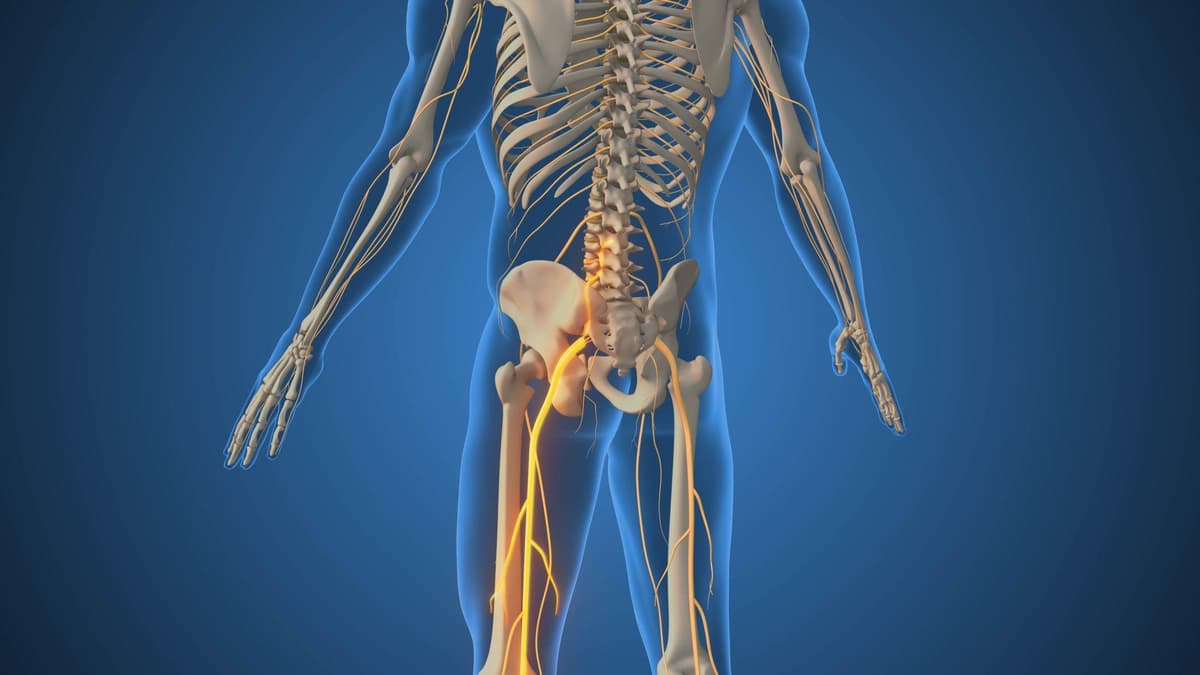
Why Does the Pain Travel So Far?
Sciatica is not a diagnosis by itself — it is a symptom set caused by compression, inflammation, or irritation of the sciatic nerve, the longest nerve in the human body. It originates from nerve roots at L4, L5, S1, S2, and S3 in the lumbar spine, passes through the ischial spine and sciatic notch in the pelvis, and branches all the way to the foot.
When a herniated disc, bone spur, or piriformis spasm impinges this nerve, pain radiates along its entire path — producing the signature electric shooting pain, numbness, or tingling from the lower back through the buttock, thigh, calf, and toes. Understanding this anatomy is essential to treating it effectively.
Why Does Sciatica Hurt More at Night?
Sciatic pain at night worsens due to three compounding factors. First, lying flat increases intradiscal pressure, which compresses already-irritated nerve roots. Second, circulation slows during sleep, reducing the natural anti-inflammatory flushing of the nerve sheath. Third, the absence of movement-based distraction amplifies pain perception neurologically. Sleeping with a pillow between the knees (side-lying) or under them (on the back) decompresses the L4–L5 region and is the most clinically recommended posture for sciatica pain at night.
What Is the Biological Process Behind Sciatic Nerve Pain?
The Key Inflammatory Pathways
COX Inhibition: Cyclooxygenase (COX-1/COX-2) enzymes convert arachidonic acid into prostaglandins — the primary chemical mediators of nerve inflammation. NSAIDs block COX; Ayurvedic actives like Wintergreen (methyl salicylate) and Nirgundi do the same via natural salicylate chemistry.
LOX Inhibition: The 5-Lipoxygenase (5-LOX) pathway generates leukotrienes that aggravate neurogenic inflammation specifically around nerve sheaths. Shallaki (Boswellia serrata) is clinically validated as a potent 5-LOX inhibitor — a mechanism absent in standard NSAIDs.
NF-kB Suppression: Nuclear Factor kappa-B is the master switch for chronic inflammation. Prolonged NF-kB activation leads to nerve sensitisation and ongoing sciatica flare-ups. Ashwagandha withanolides and Guggulu guggulsterones suppress NF-kB activation, addressing the root of chronicity.
TRPV1 & TRPM8 Modulation: Camphor and menthol (peppermint) activate thermal receptors in the skin — interrupting pain signals at the peripheral nerve level and producing immediate analgesic relief.
Which Ayurvedic Botanicals Actually Work for Sciatica?
Primary Anti-inflammatory Actives
Nirgundi (Vitex negundo): Reduces PGE2 and TNF-alpha. Classical Sahacharadi tailam uses this specifically for sciatica and spinal nerve pain.
Shallaki (Boswellia serrata): Unique 5-LOX inhibitor — reduces nerve sheath inflammation without gastric damage.
Ashwagandha (Withania somnifera): Withanolides suppress NF-kB, reduce cortisol-mediated inflammation, and support nerve regeneration.
Analgesic Agents
Gandhapura/Wintergreen: Methyl salicylate inhibits COX and produces deep transdermal analgesia — penetrates up to 3 cm into muscle tissue.
Camphor (Kapoor): Activates TRPV1/TRPM8 receptors; local anaesthetic and rubefacient. Increases circulation at application site.
Pudina/Peppermint: Menthol binds cold receptors to produce immediate cooling analgesia, reduces secondary muscle spasm around the nerve.
Carrier & Nutritive Oils
Til/Sesame: Rich in sesamol and sesamin — anti-inflammatory transdermal carrier that drives actives deep into tissue.
Alsi/Flaxseed: ALA omega-3 modulates the inflammatory cascade; supports cartilage and ligament hydration at L4–L5.
Neuro-supportive Herbs
Jyotishmati (Celastrus paniculatus): Supports myelin sheath health and nerve conduction velocity.
Atibala (Abutilon indicum): Reduces Vata aggravation specifically in nerve channels (srotas); used in classical neurological formulations.
How Does Ayurvedic Pain Management Compare to Allopathic Medicine?
What Is the Best Way to Apply Ayurvedic Oil for Sciatica?
Step-by-Step Application Protocol
Clean: Wash the lower back, hip, and affected leg with warm water to open pores.
Warm: Gently warm the Reset Emulsion between palms for 20–30 seconds to activate volatile actives.
Apply: Use fingertips to apply along the lumbar spine, buttock, and down the posterior thigh following the nerve path.
Massage: Use firm circular strokes for two minutes at L4–L5, then long downward strokes along the sciatic nerve path to the calf.
Absorb: Leave on for minimum thirty minutes — do not wash off immediately. Apply before sleep for maximum overnight absorption.
Usage Frequency by Condition Type
How Do I Choose the Right Ingredient for My Sciatica Symptoms?
Try Reset Emulsion —
India's easiest-to-rub Ayurvedic pain relief: https://www.reset.in/products/emulsion
Frequently Asked Questions
Does sciatica cause knee pain?
Yes. When sciatica originates at L3–L4, the nerve compression can refer pain to the inner knee and anterior thigh. At L5–S1, pain typically travels to the outer calf and foot. Knee pain accompanying low back symptoms is a red flag to investigate lumbar nerve root involvement before treating the knee in isolation.
How do I sleep with a herniated disc?
The best position for herniated disc pain is side-lying with a firm pillow between the knees, keeping the spine neutral. Back sleepers should place a pillow under the knees to reduce lumbar lordosis. Avoid sleeping on your stomach — it hyper-extends the lumbar spine and worsens L4–L5 disc pressure.
Is swimming good for sciatica?
Yes — swimming is one of the most sciatica-friendly exercises because water buoyancy eliminates axial spinal load while still mobilising the hip flexors and lumbar muscles. Freestyle and backstroke are preferred. Butterfly stroke creates lumbar hyperextension and should be avoided during acute phases.
Why is sciatica pain worse at night?
Lying flat increases intradiscal pressure and reduces the movement-based distraction that naturally blunts pain signals during the day. Reduced circulation during sleep also slows the anti-inflammatory flushing of nerve tissue. Applying Reset Emulsion before bed and using a knee-pillow setup can significantly reduce night pain.
How long does sciatica last?
Acute sciatica from a muscle spasm typically resolves in four to six weeks with conservative management. Sciatica from a herniated disc may take eight to twelve weeks. Chronic sciatica — lasting more than twelve weeks — requires a multi-modal approach including Ayurvedic therapy, targeted physiotherapy, and postural correction.
What is Ayurvedic treatment for sciatica?
Ayurvedic treatment targets the aggravated Vata dosha in the nervous system using: topical herbal emulsions (Nirgundi, Wintergreen, Camphor), internal formulations (Ashwagandha, Shallaki, Guggulu), Panchakarma therapies (Kati Basti — warm medicated oil pooling on the lower back), and targeted yoga and stretching protocols.
What is the best sitting position for sciatica?
Sit with both feet flat on the floor, knees at ninety degrees, and a small lumbar roll behind the lower back. Avoid crossing legs — it rotates the pelvis and compresses the piriformis against the sciatic nerve. Rise from chairs slowly using arm rests to avoid sudden lumbar flexion.
Are sciatica pain relief tablets effective?
Oral NSAIDs (ibuprofen, naproxen) provide short-term relief but do not address nerve root compression. Gabapentin is used for neuropathic pain but causes drowsiness. Ayurvedic oral supplements like Shallaki and Ashwagandha address the underlying inflammation without systemic side effects — best combined with topical therapy for comprehensive relief.
What are the acupressure points for sciatica?
The most clinically used acupressure points for sciatica are GB30 (in the buttock at the sciatic notch — relieves hip and buttock pain), BL40 (at the back of the knee — decompresses the sciatic nerve), BL60 (between the lateral malleolus and Achilles tendon), and GV4 (between L2–L3 spinous processes — the Ayurvedic Kati marma point).
Is sciatica surgery dangerous?
Surgery (microdiscectomy or laminectomy) is generally safe in experienced hands with a success rate of eighty to ninety percent for pain relief. However, risks include nerve damage, infection, failed back surgery syndrome, and recurrence. Surgery is a last resort — recommended only after six or more weeks of conservative treatment have failed, or in cases of progressive neurological deficit or loss of bladder/bowel control.
Is walking good for sciatica?
Yes — walking is one of the most recommended activities for sciatica recovery. Low-intensity walking promotes circulation, gently mobilises the lumbar spine, and releases endorphins. Aim for twenty to thirty minutes of flat-surface walking daily. Avoid prolonged sitting after walking — alternate between movement and lying down for the first few weeks.
How do I sleep with sciatica?
The most effective positions are: (1) on your side with a pillow between the knees — reduces piriformis pressure on the sciatic nerve; (2) on your back with a pillow under the knees — decreases lumbar nerve root compression. A medium-firm mattress is best. Apply Reset Emulsion along the lumbar spine and hip before bed for overnight nerve recovery.
What does sciatica at L4 L5 feel like?
L4–L5 sciatica typically produces pain on the outer shin and top of the foot, with possible weakness in foot dorsiflexion (foot drop in severe cases). Numbness is felt in the web space between the first and second toes. This level is the most common herniation site and usually responds well to Ayurvedic topical therapy and targeted nerve-gliding exercises.
How do I sleep in sciatica pain when nothing seems to help?
When standard positions fail: try the foetal position (knees drawn toward chest on the less-painful side) to maximally open the posterior spinal canal. Place a firm pillow under the painful hip. Apply warm Reset Emulsion compress — soak a cloth in warm water, add a few drops of the emulsion, and place on the lower back for fifteen minutes before lying down. This reduces muscle guarding around the nerve root significantly.
Key Takeaways: Golden Rules for Sciatica Recovery
Never ignore radiating pain below the knee — if numbness or weakness accompanies it, seek imaging before self-treating.
Topical Ayurvedic emulsions work best when applied consistently twice daily — the active compounds require cumulative tissue saturation for sustained relief.
Movement beats bed rest — gentle walking and nerve-gliding exercises heal sciatica faster than static rest.
Nighttime application of herbal emulsions (Wintergreen + Camphor + Nirgundi) delivers maximum results because skin permeability increases during the body's repair cycle at night.
Shallaki is the most underused sciatica herb — its 5-LOX inhibition specifically targets nerve sheath inflammation that NSAIDs cannot reach.
Posture is treatment — every hour of poor sitting undoes the healing from your topical therapy. Prioritise lumbar support throughout the day.
Surgery is rarely necessary — ninety percent of sciatica cases resolve conservatively within twelve weeks with the right protocol.
Related Reading
Ayurvedic Pain Relief Oils & Herbs: Complete Guide — https://www.reset.in/blogs/best-ayurvedic-pain-relief-oils
Shop Reset Emulsion — Easy-to-Rub Pain Relief — https://www.reset.in/products/emulsion
Share this article:


