
Pain Relief
Tailbone Pain: Why You Might Have It and How to Treat It?
2026-05-08
5 min read

2026-04-05 • 5 min read
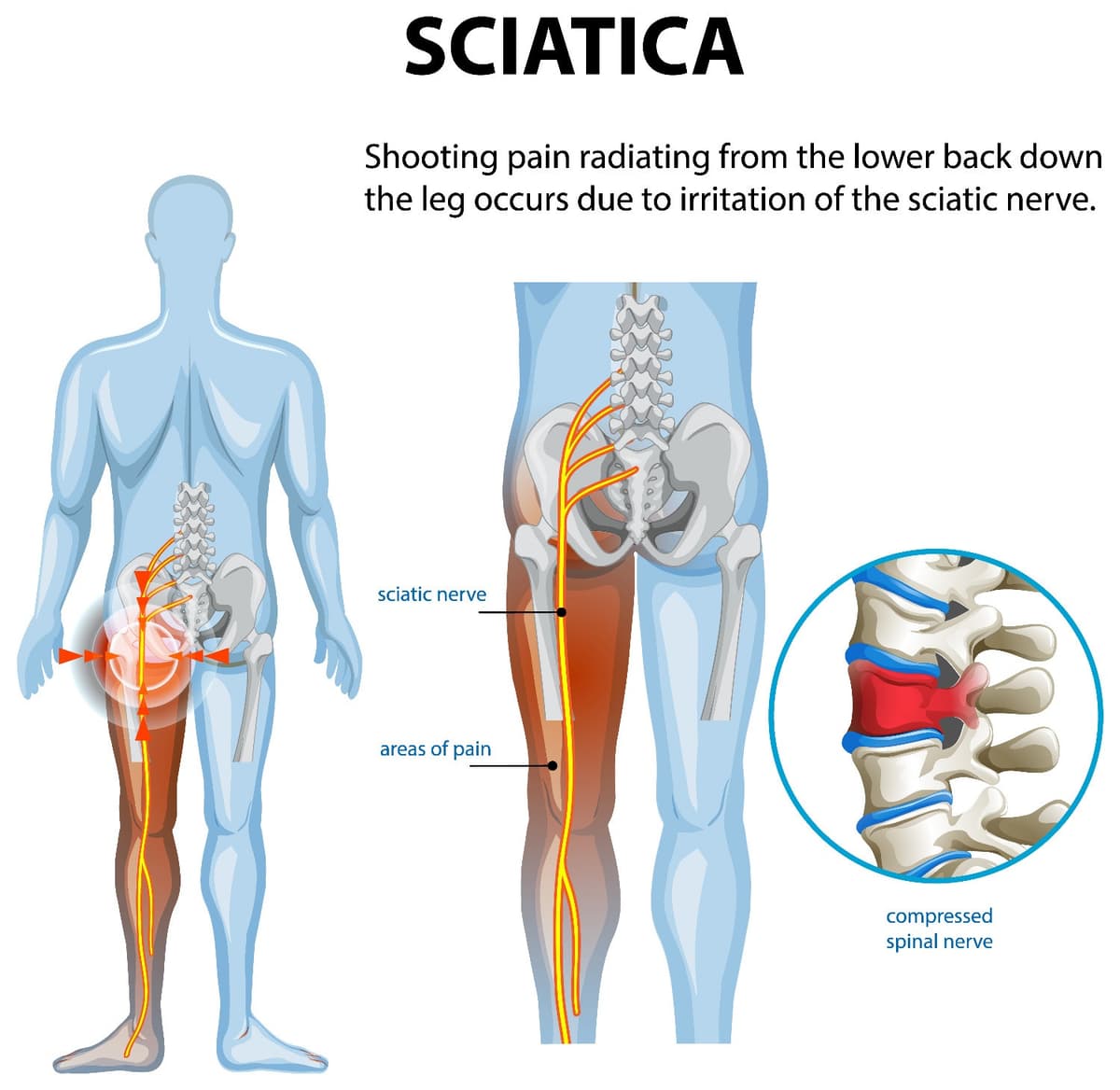
You wake up, roll over, and feel it — that sharp, electric bolt shooting from your lower back all the way down your leg. It steals your sleep, slows your stride, and makes even sitting at a desk feel like an endurance test. If you've been living with sciatica, you already know the pain is unlike anything else. What you probably don't know is how long it's going to last — and more importantly, what you can do right now to make it stop sooner.
Sciatica affects roughly 10–40% of people at some point in their lives, according to reported clinical data, yet it remains widely misunderstood. Many people either panic and assume it signals permanent damage, or dismiss it and wait too long to act. Neither approach serves your recovery. As sciatica specialists consistently emphasize, understanding the nerve, its triggers — including lumbar hernia — and your own recovery timeline is the single most powerful thing you can do before reaching for relief. This guide gives you exactly that.
Sciatica is not a diagnosis in itself — it is a symptom. Specifically, it describes pain that radiates along the path of the sciatic nerve, the longest and widest nerve in the human body. This nerve originates in the lower lumbar spine (L3–S3), branches through the buttocks, and runs down the back of each leg to the feet. When anything compresses or irritates this nerve — a herniated disc, bone spur, tight muscle, or inflamed tissue — the result is the characteristic burning, shooting, or stabbing sensation that defines sciatica.
What causes this compression? The list is longer than most people expect.
Lumbar hernia deserves particular attention here. When the soft inner gel of a spinal disc pushes through its tough outer casing, it can press directly against the nerve root, sending pain signals shooting down the entire sciatic pathway. This is why lower back issues so frequently show up as leg pain — your spine and your legs are sharing a nerve.
This is the question everyone with sciatica wants answered. The honest answer is: it depends — on the cause, the severity, your habits, and how quickly you intervene.
There are two broad categories. Acute sciatica arrives suddenly, often from a specific incident like lifting incorrectly or a sudden twist. Chronic sciatica persists or recurs over weeks, months, or years and is usually tied to an underlying structural issue like lumbar hernia or disc degeneration.
The encouraging reality is that most acute sciatica cases — even those caused by lumbar hernia — resolve within six to twelve weeks with appropriate care. Surgery is rarely the first answer and is considered only when conservative treatment has failed over several months, or when there is progressive neurological loss. What matters most is what you do in those first few weeks.
Understanding why sciatica pain persists helps you make smarter decisions about managing it. At the core of the problem is neuroinflammation — the inflammatory response of the nervous system itself.
When the sciatic nerve is compressed, the surrounding tissue releases inflammatory chemicals, including cytokines and prostaglandins. These don't just cause pain at the compression site; they sensitize the entire length of the nerve, which is why you feel pain in your calf or foot even when the actual problem is in your lumbar spine. This is the biology of referred nerve pain.
Several common behaviors directly extend this inflammatory cycle and delay healing:
Prolonged sitting compresses lumbar discs and restricts blood flow to the nerve
Inactivity allows the surrounding muscles to stiffen, increasing compression
Sleeping in poor positions (especially on the stomach) puts sustained stress on the lumbar curve
Ignoring early warning signs — which often appear as mild lower back stiffness before the leg pain develops — allows inflammation to build unchecked
It is worth noting the parallel with other chronic pain conditions. Just as frozen shoulder progresses through recognizable stages when inflammation is left unmanaged, sciatica follows a predictable worsening pattern when its early signals are dismissed. The inflamed nerve becomes hypersensitive. Mild compression begins to produce severe pain. Recovery time doubles.
The good news is this process is reversible — especially when addressed early and consistently.
Sciatica specialists are clear on one thing: passive rest is not the answer. While the instinct to lie still and wait out the pain is understandable, prolonged immobility is one of the leading reasons sciatica drags on for months rather than weeks. Here is what actually works.
Gentle, consistent movement that lengthens the piriformis, hamstrings, and lower back muscles reduces nerve compression without aggravating it. The key word is gentle. Sharp, forced stretching during a flare-up can worsen symptoms. For more on how to stretch the lower back safely, see the FAQ section at the end of this article.
Cold packs in the first 48–72 hours reduce acute inflammation. Heat applied after that stage relaxes the surrounding muscles, which reduces indirect pressure on the nerve. Alternating both works well for many people in the subacute phase.
The lumbar spine has a natural inward curve. When this is lost — through slouching, weak core muscles, or poor ergonomic setup — disc pressure increases significantly. A simple lumbar support pillow while seated can reduce nerve compression during the hours when most people sit the longest.
One of the most effective strategies during both the acute and subacute phases of sciatica is consistent topical application to reduce local nerve inflammation. This is where Reset's formulations offer meaningful support.
Reset Easy-to-Rub Emulsion is a fast-acting, roll-on herbal formulation crafted with Nirgundi — a traditional Ayurvedic ingredient known for its potent anti-inflammatory and analgesic properties. Nirgundi has long been used in classical Ayurveda specifically for nerve-related pain and muscular tension along the spine. The roll-on delivery makes it practical for the lower back and buttock region where sciatic pain tends to concentrate, allowing the active compounds to penetrate deeply without the mess of traditional oils.
Apply directly to the lumbar region, buttocks, or along the back of the thigh wherever the pain is most intense. Consistent daily application — especially after gentle stretching — supports the reduction of nerve-adjacent tissue inflammation.
Reset Ultra Potent Gel takes targeted relief further. Formulated with a concentrated blend of Wintergreen — a natural source of methyl salicylate, the compound structurally related to aspirin — this gel delivers 2X more potent analgesic action through advanced nanotechnology. The nanotechnology formulation means active ingredients penetrate deeper into tissue layers than conventional topicals, reaching the nerve-adjacent inflammation that surface-level products miss. It also carries a clinically noted 54% improved analgesic activity, making it particularly effective during moderate to severe flare-ups.
Boswellia, another key Ayurvedic ingredient used in Reset's formulations, works by inhibiting 5-LOX — the enzyme that produces the leukotriene inflammatory mediators responsible for nerve sensitization. This is a fundamentally different mechanism from conventional pain relief, targeting the inflammatory cascade rather than simply masking the pain signal.
The combined use of the Emulsion for daily maintenance and the Ultra Potent Gel for acute flare-ups creates a complementary topical protocol that addresses both ongoing inflammation and peak pain moments.
Most sciatica cases respond to conservative management at home. But there are specific signals that warrant professional assessment — and ignoring them can lead to lasting neurological damage.
If imaging hasn't been done and the pain has lasted more than four weeks, asking a sciatica specialist for an MRI referral is reasonable. Lumbar hernia specifically requires imaging confirmation — the pain pattern can mimic other conditions, and the correct diagnosis determines the correct treatment.
People living with rheumatoid arthritis or structural conditions like knee pain should also flag sciatica symptoms to their specialist early, as overlapping inflammatory conditions can complicate both diagnosis and recovery.
Recovery from sciatica is not just about what you do during treatment — it's about the environment you create for healing every hour of every day. Small, consistent choices compound dramatically over a six to twelve-week recovery window.
Sleeping on your side with a pillow between your knees keeps the pelvis neutral and prevents lumbar rotation that compresses the sciatic nerve root overnight. Avoid sleeping face-down — this position forces the lumbar spine into hyperextension and keeps the nerve under sustained pressure for hours. For those dealing with tailbone pain alongside sciatica, a pressure-relieving mattress topper can serve both conditions simultaneously.
The research on sciatica is consistent: people who stay gently active recover faster than those who rest completely. You don't need to exercise hard — short walks every 90 minutes, gentle yoga, or even standing periodically at a desk keeps the nerve pathway mobile and supports blood flow to the healing tissues.
What you eat directly influences how quickly nerve inflammation resolves. Omega-3 fatty acids (found in flaxseed, walnuts, and fatty fish), turmeric, and ginger are well-documented dietary anti-inflammatories. Processed foods, refined sugar, and alcohol all promote the systemic inflammation that keeps the sciatic nerve sensitized.
If you sit for work, your chair should allow both feet flat on the floor, with knees at a 90-degree angle and the lumbar curve supported. Your screen should be at eye level so the neck doesn't pull the spine out of alignment. Even correct ergonomics won't help if you sit for four unbroken hours — set a reminder to stand and move every hour without exception.
Sciatica is nerve pain along the sciatic pathway, most commonly caused by lumbar hernia or piriformis syndrome
Acute sciatica typically resolves in 4–12 weeks with proper management; chronic sciatica requires addressing the underlying structural cause
Neuroinflammation — not just compression — drives sciatic pain, which is why anti-inflammatory strategies (topical, dietary, and movement-based) are central to recovery
Sciatica specialists consistently advise gentle, consistent movement over bed rest
Reset's Emulsion (with Nirgundi) and Ultra Potent Gel (with Wintergreen and nanotechnology) offer targeted topical support that works alongside stretching, posture correction, and movement
See a specialist immediately if you develop numbness in both legs, foot drop, or loss of bladder/bowel control — these indicate serious nerve compression
Daily habits — sleep position, ergonomics, nutrition, and movement frequency — determine whether sciatica heals in six weeks or six months
The most effective lower back stretches for sciatic relief target the piriformis and the lumbar extensors. The knee-to-chest stretch — lying on your back and pulling one knee gently toward your chest for 20–30 seconds — decompresses the lumbar discs. The piriformis stretch (lying on your back, crossing one ankle over the opposite knee, and gently pulling both toward your chest) directly releases the muscle most likely to irritate the sciatic nerve. Hold each stretch for 30 seconds, repeat three times per side, and never force the range of motion during a flare-up.
Yes. Oral anti-inflammatory tablets (like common NSAIDs) address systemic inflammation, while topical products like Reset Ultra Potent Gel and Reset Emulsion deliver localized action directly to the affected area. Using both in combination — particularly during acute flares — can provide broader and more sustained relief than either approach alone. Always follow prescribed dosing guidance for oral medications.
Buttock pain in sciatica typically points to piriformis syndrome or compression at the sacroiliac joint level, rather than at the lumbar spine. The sciatic nerve passes through or directly beneath the piriformis muscle. When this muscle is tight — from prolonged sitting, hip weakness, or repetitive activity — it can compress the nerve and generate localized buttock pain that may or may not radiate further down the leg. Targeted piriformis stretching and applying topical relief directly to the gluteal region can significantly reduce this specific pattern.
Hip and leg pain along the sciatic pathway responds well to a combination of approaches: gentle hamstring stretching to decompress the nerve along the back of the thigh, lateral leg raises to strengthen the hip abductors and reduce pelvic instability, and regular topical application of Reset Emulsion along the outer thigh and hip to reduce nerve-adjacent inflammation. Heat applied to the hip before movement loosens the joint and surrounding tissue, making stretching more effective and less painful.
Direct topical application is one of the most practical first-response strategies. Applying Reset Ultra Potent Gel to the gluteal region immediately after a gentle piriformis stretch allows the active compounds to reach inflamed tissue while circulation is elevated. Foam rolling the piriformis — sitting on a foam roller, crossing one ankle over the opposite knee, and rolling slowly — can also break up the muscle tension driving the nerve compression. Consistency matters far more than intensity here; brief daily sessions outperform aggressive, infrequent effort.
For more on related pain conditions and natural recovery approaches, explore:
Share this article:
A 2X more powerful formula for enhanced relief.

₹799.00
₹649.00
Uniquely formulated gel with wintergreen oil containing natural methyl salicylate.

₹349.00
₹299.00
An easy to apply potent formula with roll-on massager

₹549.00
₹449.00
Rejuvenating blend of herbal ingredients for your liver detox.

₹559.00
₹449.00
| Cause | How It Triggers Sciatica | Prevalence |
|---|---|---|
| Lumbar hernia (herniated disc) | Disc material presses directly on the sciatic nerve root | Most common cause (~90% of cases) |
| Piriformis syndrome | Tight piriformis muscle in the buttock irritates the nerve | Common, often missed |
| Spinal stenosis | Narrowing of the spinal canal squeezes the nerve | More common in adults over 50 |
| Degenerative disc disease | Worn discs reduce cushioning and cause nerve friction | Age-related, cumulative |
| Spondylolisthesis | One vertebra slips forward over another | Less common, often from injury |
| Type | Typical Duration | Key Factors |
|---|---|---|
| Mild acute sciatica | 4–6 weeks | Rest, stretching, and topical relief are usually sufficient |
| Moderate acute sciatica | 6–12 weeks | Needs structured physiotherapy and lifestyle modification |
| Chronic sciatica | 3+ months (recurring) | Underlying cause must be addressed; specialist input needed |
| Sciatica from lumbar hernia | 6–12 weeks with conservative treatment | Most resolve without surgery; imaging recommended |
| Sciatica from spinal stenosis | Variable; may be long-term | Requires position-specific management |
| Relief Approach | Best Timing | Mechanism | Specialist Rating |
|---|---|---|---|
| Cold therapy | First 72 hours | Reduces acute inflammation | ★★★★★ |
| Gentle stretching | Days 3 onwards | Decreases muscle tension & compression | ★★★★★ |
| Heat therapy | Subacute phase | Increases circulation, relaxes muscles | ★★★★☆ |
| Topical pain relief | Any phase | Targeted local anti-inflammatory action | ★★★★★ |
| Core strengthening | Recovery phase | Protects lumbar spine long-term | ★★★★★ |
| Posture correction | Ongoing | Reduces lumbar disc pressure | ★★★★☆ |
| Symptom | Manage at Home | See a Specialist |
|---|---|---|
| Dull ache along one leg | ✓ | — |
| Pain that eases with movement | ✓ | — |
| Pain that has lasted more than 6 weeks | — | ✓ |
| Numbness or tingling in both legs | — | ✓ |
| Loss of bladder or bowel control | — | Emergency |
| Foot drop (inability to lift the foot) | — | ✓ Urgent |
| Pain following a trauma or fall | — | ✓ |
| Suspected lumbar hernia (imaging not yet done) | — | ✓ |

