
Massage Oils: Benefits, Types & How to Use Them Effectively
2026-03-19 • 5 min read
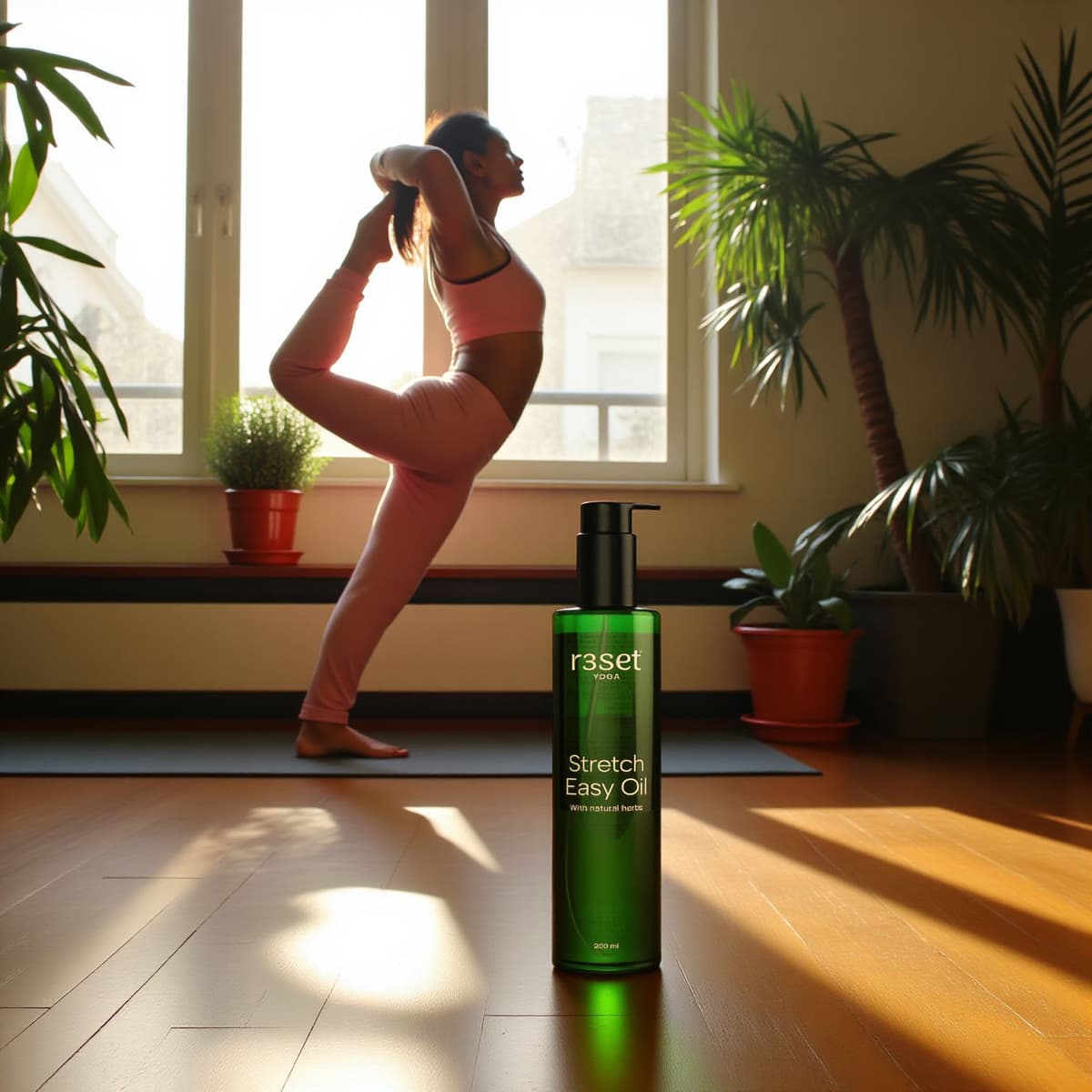
Massage oils work by penetrating deep into the skin and muscle tissue, activating thermoreceptors (TRPV1 channels), suppressing inflammatory mediators like COX and NF-κB, and improving localised blood circulation. Ayurvedic massage oils blended with herbs such as Ashwagandha, Mahanarayan, and Sesame base deliver targeted muscle relaxation, joint lubrication, and stress relief — without the side effects of synthetic topical agents. For an Ayurvedic formulation built for active bodies, Reset's
Stretch Easy Oil is engineered specifically for this purpose.
What Is a Massage Oil?
A massage oil is a lipid-rich medium — typically plant-based — that reduces friction between hands and skin while simultaneously delivering bioactive compounds into subcutaneous tissue. The best massage oils do not merely lubricate; they carry therapeutic phytochemicals that interact directly with pain receptors, inflammatory enzymes, and circulation pathways.
Ayurvedic massage oils, or abhyanga oils, take this a step further by infusing a base oil with potent herbs processed at precise temperatures so that fat-soluble compounds (terpenoids, alkaloids, flavonoids) are extracted and made bioavailable through the skin.
Why Does Oil Massage Work? The Biology Behind It
The Biological Pathways Activated by Oil Massage
TRPV1 Receptor Activation: Warming massage oils containing camphor or menthol bind to transient receptor potential vanilloid 1 (TRPV1) channels, producing localised heat sensation that overrides pain signalling.
COX/LOX Inhibition: Herbal actives such as Boswellia and Nirgundi suppress cyclooxygenase (COX-1/COX-2) and lipoxygenase (LOX) enzymes — the same enzymes targeted by NSAIDs — without gastric side effects.
NF-κB Suppression: Curcumin and sesamin in sesame oil down-regulate nuclear factor kappa-B, reducing the transcription of pro-inflammatory cytokines (TNF-α, IL-6) at a cellular level.
Prostaglandin Pathway Modulation: By limiting prostaglandin E2 synthesis, quality massage oils reduce swelling and nociceptive hypersensitivity in strained muscles.
Myofascial Release: Physical massage pressure — amplified by the lubricating oil — disrupts adhesions in the fascia, restoring full range of motion.
What Are the Different Types of Massage Oils?
Not all massage oils are built the same. Choosing the right type depends on your goal — relaxation, pain relief, athletic recovery, or skin nourishment.
Reset's Stretch Easy Oil falls in the herbal medicated category — designed for people who need more than basic relaxation.
What Botanicals Power the Best Massage Oils?
How Does Ayurvedic Oil Massage Compare to Allopathic Relief?
How Do I Use Massage Oil Effectively?
Step-by-Step Application Guide
Clean the area: Wash or wipe the target area to remove sweat, dust, and synthetic products that block absorption.
Warm the oil: Pour a small amount into your palms and rub together for ten to fifteen seconds, or place the bottle in warm water for two minutes. Warm oil activates thermoreceptors faster.
Apply with light pressure: Begin with effleurage strokes — long, sweeping movements toward the heart — to prime circulation.
Massage in circles: Use circular motions with your fingertips around joints (knee caps, shoulders, ankles) and linear strokes along muscle bellies.
Work deeper gradually: Increase pressure progressively. Never force pressure on acutely inflamed or swollen tissue.
Allow absorption time: Leave the oil on for a minimum of twenty minutes. For maximum benefit, apply at night and sleep with it on — overnight absorption amplifies anti-inflammatory effect.
Wipe away excess: Use a warm, damp cloth. Avoid soap immediately post-application so the botanical actives continue to act.
Use Reset Stretch Easy Oil with this protocol for best results — its herbal blend is formulated to penetrate rapidly in the first five minutes of massage.
How Often Should I Apply Massage Oil?
Which Ingredient Works Best for My Symptom?
How do I choose the right product? Match your primary complaint to the active that targets it.
Can Massage Oils Improve Blood Circulation?
Yes — and the mechanism is well-documented. Mechanical massage pressure dilates capillaries and increases local blood flow by up to 30%, according to studies in the Journal of Alternative and Complementary Medicine. When combined with warming agents in a quality oil — such as camphor or ginger — vasodilation is further amplified through thermoreceptor-mediated signalling.
Improved circulation means faster removal of lactate and metabolic waste products from fatigued muscles, faster delivery of oxygen and nutrients, and reduced recovery time after exercise or physical strain. This is why athletes in many disciplines have used oil massage as a non-pharmaceutical recovery tool for centuries — and why modern sports physiotherapy routinely incorporates it.
Why Choose Reset Stretch Easy Oil?
Reset's Stretch Easy Oil is formulated as a medicated herbal massage oil built on classical Ayurvedic principles with modern bioavailability science. It combines a sesame and castor oil base with key actives including Ashwagandha, Nirgundi, Mahanarayan extract, and Boswellia — delivering simultaneous anti-inflammatory, analgesic, and neuro-supportive action in one application.
It is free from parabens, mineral oil, and artificial fragrance. The texture is non-greasy, designed to absorb within twenty minutes of massage without leaving residue on clothing or sheets. It is suitable for daily use on muscles, joints, and the lower back — and is especially effective when used with the seven-step protocol outlined in Section 6 above.
Frequently Asked Questions
What are the different types of massage oils?
Massage oils broadly fall into five categories: sesame-based Ayurvedic oils, coconut oil blends, arnica or camphor-infused analgesic oils, essential oil blends, and multi-herb medicated oils. Each serves a different purpose — from relaxation to deep therapeutic action. See Section 3 for a full breakdown.
Which oil is best for muscle relaxation?
Herbal medicated oils containing Ashwagandha, Nirgundi, and a sesame base are the gold standard for muscle relaxation. They reduce COX-mediated inflammation, lower cortisol through adaptogenic action, and physically ease fascial tension when applied with proper massage technique.
How do I use massage oil effectively?
Warm the oil before application, apply using effleurage strokes first, then work in circular motions around joints and linear strokes along muscles. Allow a minimum of twenty minutes for absorption. Night-time application gives the longest window for active compounds to work. See the full seven-step protocol in Section 6.
Can massage oils improve blood circulation?
Yes. Massage pressure alone improves local capillary blood flow by up to 30%. Oils containing warming agents like camphor and ginger further enhance vasodilation through TRPV1 receptor activation. Better circulation accelerates muscle recovery, reduces stiffness, and removes lactate buildup faster.
Is it safe to use massage oil every day?
Ayurvedic massage oils made with natural, plant-based ingredients are generally safe for daily use. Daily abhyanga is in fact a recommended Ayurvedic practice (dinacharya). The exception would be if you have active skin infections, open wounds, or documented allergies to specific botanicals in the blend.
How long should I massage for results?
A minimum of ten to fifteen minutes per target area is recommended for therapeutic benefit. For generalised relaxation or stress relief, a full-body massage of twenty to thirty minutes, three to four times a week, produces measurable cortisol reduction and improved sleep quality.
Can massage oil be used for joint pain?
Absolutely. Oils containing Mahanarayan, Nirgundi, and Boswellia are specifically indicated for joint conditions in classical Ayurvedic texts. They reduce intra-articular inflammation, lubricate the periarticular tissue, and improve joint mobility when applied with consistent circular massage technique.
What is the best time to apply massage oil?
Night-time is optimal for therapeutic effect because the body is in a recovery state and absorption is uninterrupted. Pre-workout application works well for athletes needing to warm up muscle tissue. Post-bath application (on slightly damp skin) improves oil penetration significantly.
Can massage oil help with back pain?
Yes. Lower back pain from muscle tension, poor posture, or disc-related stiffness all respond well to oil massage. Apply using long strokes along the paravertebral muscles (either side of the spine) and avoid direct spinal pressure. Regular application can reduce chronic lower back discomfort substantially within two to four weeks.
Is warm oil massage better than cold?
Warm oil is clinically superior for pain and stiffness. Heat improves capillary dilation, enhances oil penetration depth, and activates TRPV1 receptors to trigger a natural analgesic cascade. Cold oil may feel refreshing but does not offer the same therapeutic depth.
What is the difference between a massage oil and a body oil?
Body oils are primarily cosmetic — designed to moisturise and soften skin. Massage oils are functional and therapeutic — formulated with specific botanical actives to penetrate deeper, reduce inflammation, and engage pain pathways. A medicated Ayurvedic massage oil like Reset Stretch Easy Oil is in an entirely different category from a standard body oil.
Can I use massage oil on children or elderly people?
Light, non-medicated oils like sesame or coconut are traditionally used for infant and elderly massage. For children under ten, avoid oils with strong camphor or eucalyptus concentrations. Elderly individuals benefit greatly from daily joint massage with a warm medicated oil — always check for skin sensitivities first.
Key Takeaways
Always warm the oil before application — heat multiplies penetration depth and therapeutic effect.
Match the oil type to your condition — use a multi-herb medicated oil for pain and stiffness; use a lighter blend for relaxation.
Leave the oil on for at least twenty minutes — do not rush absorption; overnight application is best for chronic conditions.
Massage with intention — use effleurage first, then circular and linear strokes; pressure and technique determine 50% of the result.
Consistency beats intensity — three sessions a week for four weeks outperforms one aggressive session every fortnight.
Choose herbal over synthetic — Ayurvedic medicated oils address the root cause; most allopathic topicals only mask it.
For active bodies and daily movers, use Reset Stretch Easy Oil as your baseline recovery ritual.
Related Reading
• Reset Stretch Easy Oil — Product Page
• Knee Pain Relief: Natural Remedies That Work
Share this article: