
Pain Relief
Sciatica treatment in ayurveda, Exercises & What Actually Works
2026-03-27
4 min

2026-06-10 • 5 min read
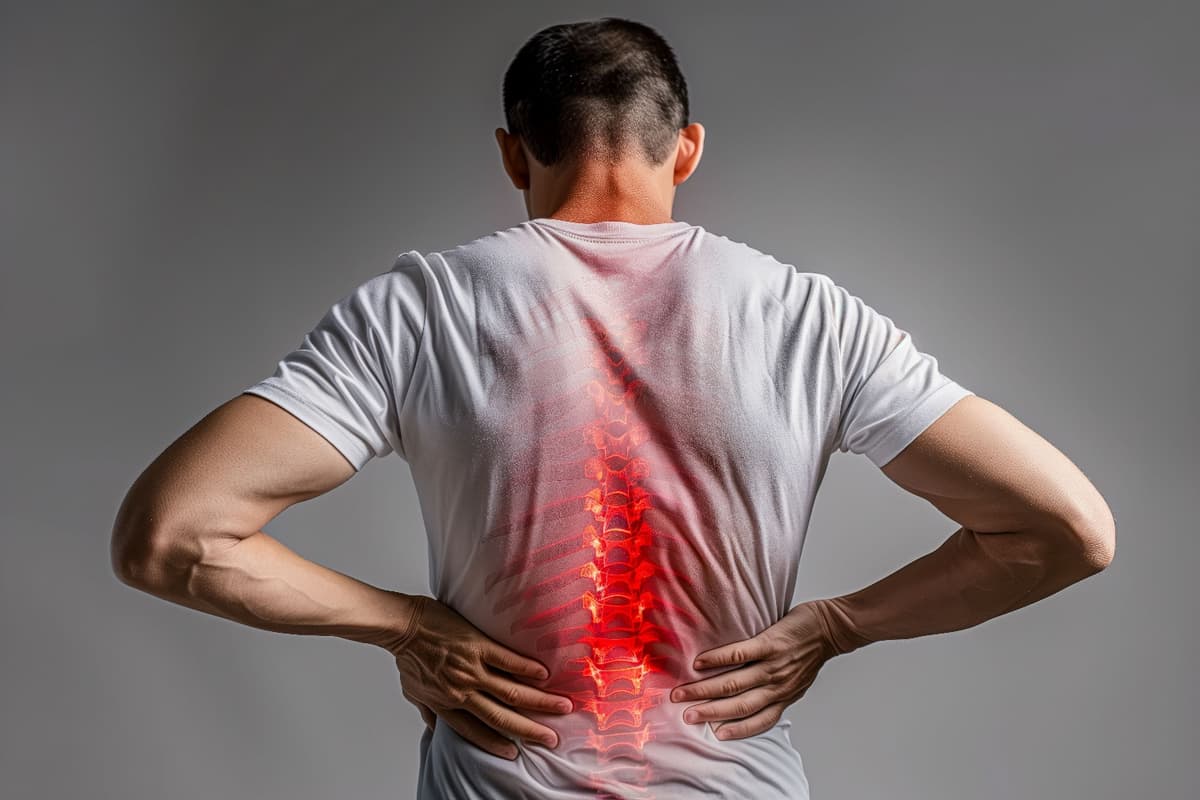
If your lower back has started sending you signals - a dull ache that will not quit, a shooting pain down one leg, or a strange numbness in your foot - there is a good chance the message is coming from one very specific address: the L4-L5 disc. Recognizing L4-L5 pain symptoms early matters, because this segment absorbs more daily mechanical stress than almost any other point in your spine, and its warnings rarely arrive without reason. This is not about ignoring discomfort until it becomes an emergency. It is about learning to read what your body is actually telling you, so you can respond with the right care at the right time.
The L4 and L5 vertebrae sit at the base of your lumbar spine, right above the pelvis, in a position that has to do double duty: support the weight of your entire upper body while still allowing you to bend, twist, and rotate freely. That combination of heavy load and high mobility makes the L4-L5 disc uniquely vulnerable to wear.
In fact, slightly more than 90 percent of all disc herniations occur at either the L4-L5 or L5-S1 level1, which is why understanding what happens here tells you so much about lower back pain in general. If you want the fuller picture of what triggers back pain beyond this one segment, our guide on what causes back pain is a useful starting point.
Not every lower back pain story starts at L4-L5. Here is how it stacks up against the segments directly above and below it.
L4-L5 pain rarely shows up as one single sensation. It tends to speak in layers, and each layer usually points to a slightly different stage of what is happening inside the disc.
A dull, centralized ache in the lower back often means the disc itself or the surrounding facet joints are irritated, without much nerve involvement yet. Once pain starts to travel - down the buttock, along the outer leg, toward the top of the foot - it usually means the L5 nerve root is being touched or compressed. Numbness, tingling, or a burning sensation along that same path is the nervous system's way of confirming irritation has moved from mechanical to neurological.
●Pain that travels below the knee, not just around the lower back
●Numbness or tingling along the outer shin and the top of the foot
●Difficulty lifting the front of the foot when walking, sometimes called foot drop
●Pain that worsens with sitting or bending forward but eases with walking
●Loss of bladder or bowel control, or numbness in the groin - this needs emergency care, not a wait-and-see approach
Every L4-L5 disc has a soft, gel-like center called the nucleus pulposus, held in place by a tougher outer ring, the annulus fibrosus. As this ring weakens from age, repetitive load, or injury, the disc changes in stages. A bulge means the disc extends outward while the annulus stays intact - early and often silent. A protrusion means the nucleus pushes against a weakened but unbroken annulus, creating a focal outpouching. An extrusion is more advanced: the nucleus breaks through the annulus, though it usually stays connected to the parent disc. Interestingly, extruded material is often more likely to shrink on its own over time, because the body's immune system recognizes it as foreign tissue and gradually reabsorbs it.
It is worth knowing that a bulge on an MRI is not automatically a life sentence. Disc changes at this level are extremely common with age - research suggests roughly six in ten people in their fifties show some disc bulge on imaging, and many never feel a thing. What determines whether you experience symptoms is not just the presence of a bulge, but whether it is inflaming or physically compressing a nerve root. That distinction is exactly why two people with similar-looking scans can have completely different experiences of pain.
You do not need to wait for pain to become unbearable before acting on it. A few practical, low-risk steps can genuinely change how your lower back feels day to day.
Start with movement, not stillness. Gentle walking and light mobility work keep circulation moving through the disc and surrounding muscles, which tends to help more than prolonged bed rest. Pair this with a look at how you sit and stand - our piece on how to improve posture walks through simple daily adjustments that ease pressure at exactly this part of the spine.
Targeted stretching and strengthening for the muscles that support the lumbar spine can also make a meaningful difference over time. If you are looking for a structured place to start, our guide to lower back pain relief exercises breaks this down step by step, and our broader overview of lower back pain causes is worth bookmarking if you want the full context behind why these issues develop in the first place.
Alongside movement, many people find comfort in massaging a targeted herbal application into the lower back and along the leg where discomfort radiates. RESET's Ultra Potent Gel and Emulsion Roll-On are both built on the same seven-herb Ayurvedic formulation - Wintergreen, Menthol, Neelgiri, Nirgundi, Camphor, Boswellia serrata, and Ajmoda - delivered through nanotechnology designed to carry the actives deeper into the skin. Neither is a substitute for medical treatment, but as part of a daily self-care routine, they can offer welcome comfort while your body does the work of healing.
Explore Ultra Potent Gel or Emulsion Roll-On to see which fits your routine.
Recovery from L4-L5 discomfort rarely comes from one single fix. It tends to come from stacking small, consistent habits: moving daily instead of guarding the area completely, correcting the postures that quietly load the lower spine for hours at a time, and giving your body simple, herbal support when it needs comfort. Stress and poor sleep also play a bigger role than most people expect - a tense body tends to hold tighter through the lower back, which can make an already irritated disc feel worse than it mechanically is.
That is the philosophy behind RESET as a whole - holistic recovery that treats physical relief, mental clarity, and daily movement as parts of the same picture, not separate problems to solve one at a time. Small, repeatable actions, done consistently over weeks rather than days, tend to outperform any single dramatic intervention.
●L4-L5 is the most frequently affected single disc level in the lumbar spine, largely because of the load and mobility it manages.
●Pain that stays local usually signals early irritation; pain that radiates below the knee usually means the L5 nerve is involved.
●Numbness, tingling, and foot drop are signs worth acting on rather than waiting out.
●Gentle movement, posture correction, and targeted herbal comfort - such as RESET's Ultra Potent Gel or Emulsion - can support day-to-day relief.
●Loss of bladder or bowel control is a medical emergency and needs immediate attention.
How long does L4-L5 pain usually last?
Most acute episodes ease within four to six weeks with rest, gentle movement, and supportive care. Pain linked to significant nerve compression can take longer and may need professional guidance.
Can L4-L5 disc problems heal on their own?
Often, yes. Many disc bulges and even some herniations shrink over time as the body reabsorbs displaced material, especially with consistent movement and posture habits that reduce ongoing strain.
What does L4-L5 nerve pain feel like?
It typically feels like a shooting, burning, or electric sensation that travels from the lower back through the buttock and down the outer leg toward the top of the foot, sometimes with numbness or tingling.
Is L4-L5 a serious condition?
Most cases are manageable without surgery. It becomes serious if you notice foot drop, progressive weakness, or any change in bladder or bowel control, all of which need prompt medical attention.
What is the best sleeping position for L4-L5 pain?
Lying on your side with a pillow between your knees, or on your back with a pillow under your knees, tends to keep the lower spine in a more neutral position and reduce nerve tension overnight.
Your lower back rarely acts up without reason. For the fuller picture of what drives lower back pain and how to build a long-term plan around it, visit our pillar guide: What Causes Back Pain.
Share this article:
A 2X more powerful formula for enhanced relief.

₹799.00
₹629.00
A dose of immunity and goodness with a tangy twist

₹439.00
₹419.00
An eco-conscious and powerful solution designed for sustainable living and effective pain management

₹999.00
₹899.00
An easy to apply potent formula with roll-on massager

₹549.00
₹449.00
| Spinal Level | Nerve Root Involved | Typical Pain Pattern | How Common |
|---|---|---|---|
| L3-L4 | L4 nerve | Front of thigh, inner knee, weaker knee extension | Less common |
| L4-L5 | L5 nerve | Outer leg, top of foot, big toe; foot drop risk | Most common single level |
| L5-S1 | S1 nerve | Back of leg, heel, outer foot; weaker calf raise | Most common overall |
| Symptom | Likely Cause | Urgency Level |
|---|---|---|
| Dull, localized lower back ache | Disc bulge or facet joint irritation | Routine - monitor and adjust posture |
| Mild pain radiating into the thigh or leg | Disc protrusion touching a nerve root | Schedule a check-up |
| Numbness or tingling in the foot or toes | Active nerve root compression | See a doctor soon |
| Foot drop or noticeable leg weakness | Significant L5 nerve compression | Urgent - see a specialist promptly |
| Bladder or bowel changes, groin numbness | Possible cauda equina syndrome | Emergency - go to the ER immediately |
| Feature | Ultra Potent Gel | Emulsion Roll-On |
|---|---|---|
| Format | Concentrated jar formula | Lightweight roll-on bottle |
| Best for | Deep, persistent lower back and leg discomfort | Everyday stiffness and on-the-go comfort |
| Texture | Non-sticky, deep-penetrating | Fast-absorbing, no residue or staining |
| Core herbs | Wintergreen, Menthol, Neelgiri, Nirgundi, Camphor, Boswellia serrata, Ajmoda | Same seven herbs, roll-on delivery |
| How to use | Apply a small amount 2-3 times daily | Roll on and massage gently 2-3 times daily |
| Question | If Yes |
|---|---|
| Does the pain travel past your knee? | Worth a professional evaluation soon |
| Any numbness or tingling in your foot or toes? | Schedule a check-up this week |
| Trouble lifting the front of your foot when walking? | See a specialist promptly |
| Pain persisting beyond two to three weeks despite rest? | Time to get it assessed |
| Any change in bladder or bowel control? | Go to the emergency room immediately |

