
Vitals/Immunity
What Is Knee Gap? Causes, Safety Concerns, and How to Treat It
2025-05-22
4 min

2026-04-22 • 5 min read
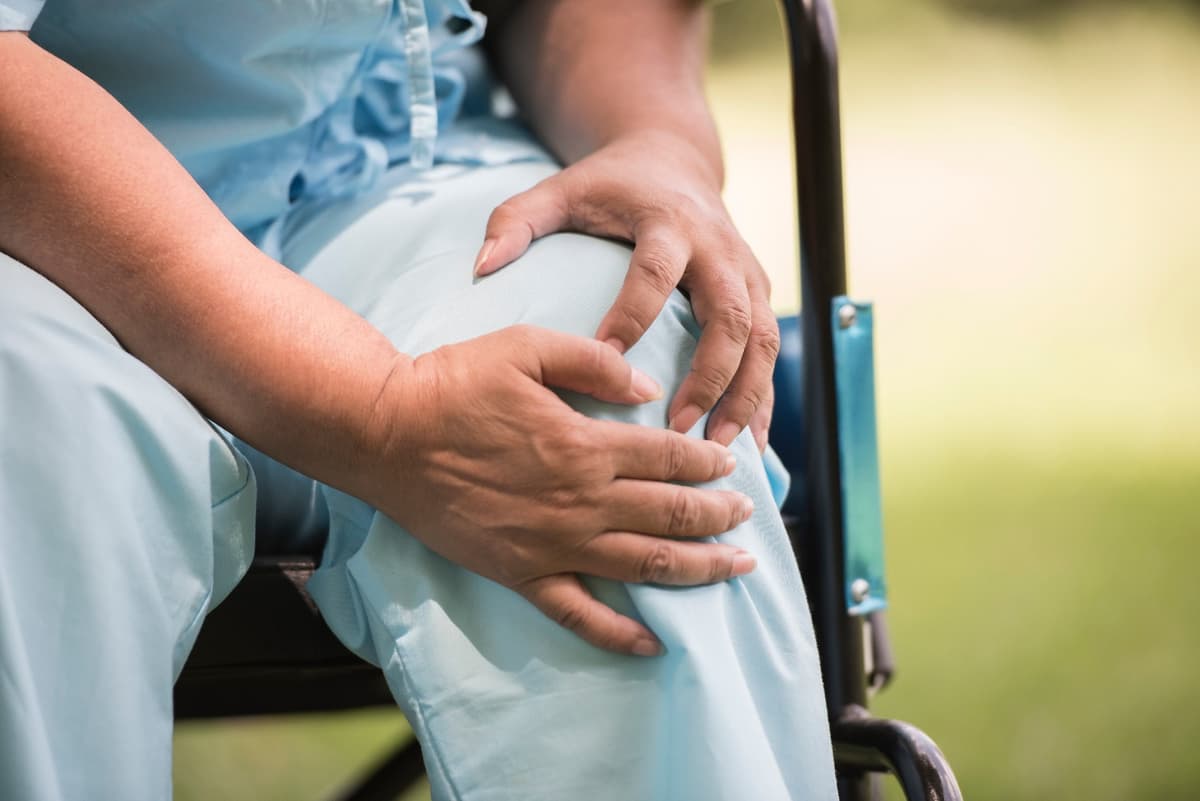
You bent down to tie your shoe, climbed a flight of stairs, or simply stood up from your desk — and there it was. A sharp twinge, a dull ache, or a swelling that suddenly made every step feel uncertain. If you have been wondering what is the fastest way to relieve knee pain, you are not alone. The knee is one of the most overworked and underappreciated joints in the human body, and when it protests, daily life can come to a halt.
The good news is that fast relief is not only possible, it is also remarkably simple when you understand the science. The RICE Method — Rest, Ice, Compression, and Elevation — remains the gold standard for managing sudden knee pain at home, and when combined with targeted herbal support, recovery can be even smoother. This guide will walk you through every step, the reasoning behind each one, and the practical tools that help you move from discomfort to confident movement.
Your knee is a marvel of engineering. It is the largest joint in your body, holding together your femur, tibia, and patella with a careful network of ligaments, tendons, cartilage, and fluid-filled bursae. Every time you walk, squat, or climb, your knees absorb forces several times your body weight. When something goes wrong — a sudden twist, repetitive strain, inflammation, or even age-related wear — your body responds by triggering an inflammatory cascade. Fluid rushes in, swelling builds, and pain signals fire to warn you that something needs attention.
Acting quickly matters. Inflammation that is allowed to settle can stiffen the joint, weaken surrounding muscles, and slow the body's natural repair process. This is especially relevant for women, who experience knee pain at higher rates due to hormonal, structural, and biomechanical differences — a topic explored in greater depth in our guide on what causes knee pain in females. The faster you intervene with smart, evidence-backed care, the faster your knee can return to its job: carrying you through the day with ease.
The RICE Method was first popularised in sports medicine in the 1970s and has remained a foundational protocol for acute soft-tissue injuries ever since. It is simple, requires no special equipment, and works with your body's natural healing response. The four steps work in concert — skipping one weakens the whole protocol. Here is how to follow each, the right way.
Rest does not mean lying in bed for a week. It means giving the injured knee a meaningful break from the activity that aggravates it. If walking up stairs causes pain, take the lift for a day or two. If squatting at the gym set things off, pause leg day. The goal is to remove the load that triggered the inflammation, allowing the soft tissues to begin repairing without being repeatedly stressed. Complete immobility is rarely helpful, but smart restraint absolutely is.
Cold therapy is one of the fastest tools available for reducing knee pain. Applying an ice pack constricts the blood vessels around the joint, which slows the inflammatory response, decreases swelling, and temporarily numbs pain receptors. Wrap your ice pack or a bag of frozen peas in a thin towel — never apply ice directly to the skin — and hold it gently over the painful area for 15 to 20 minutes. Repeat every two to three hours during the first 48 hours for maximum benefit.
A snug elastic bandage or knee sleeve does two important jobs. It limits fluid build-up in the joint, and it offers a sense of stability that many people find reassuring during the early hours of recovery. Wrap firmly but never tightly — you should feel supported, not pinched. If your toes feel cold, your foot starts to tingle, or the wrap leaves indentations on the skin, loosen it immediately. Most people remove compression at night to allow free circulation while sleeping.
This is the step most people skip, and it is genuinely powerful. Raising your knee above the level of your heart uses gravity to encourage fluid drainage away from the joint, which directly reduces swelling. Stack two or three pillows under your leg while resting on a sofa or in bed. Even 20 to 30 minutes of elevation, repeated a few times a day, can visibly bring down puffiness and ease pressure inside the joint.
Here is everything you need to remember about RICE, in one quick reference:
RICE addresses the mechanical and inflammatory side of knee pain, but there is another dimension worth tapping into: topical herbal relief. A well-formulated topical can deliver actives directly to the joint, providing cooling, anti-inflammatory, and analgesic support exactly where you need it — without the systemic load of oral painkillers. At Reset, we have built two products specifically for this purpose, each suited to different intensities of pain.
The Reset Easy-to-Rub Emulsion is a non-greasy, plant-based roll-on designed for daily use. Its smooth-glide format makes it easy to apply directly over the knee with no mess, no stickiness, and no overpowering smell. The formulation brings together Wintergreen leaf (rich in natural methyl salicylate, a traditional analgesic), Neelgiri (Eucalyptus Globulus) with its antioxidant essential oils, Menthol for an immediate cooling sensation, Nirgundi — esteemed in Ayurveda for its anti-inflammatory action — alongside Camphor, Boswellia serrata, and Ajmoda to support overall joint comfort. You can read more about these herbs in our deep-dives on nirgundi oil for joint pain and does boswellia help with joint pain.
For those moments when knee pain feels stubborn or intense — a flare-up after a long hike, an aggravated old injury, or a particularly demanding day on your feet — the Reset Ultra Potent Gel steps in. Engineered with advanced nanotechnology, it delivers 2X potency compared to standard pain relief gels and demonstrates a 54% improved analgesic action. The ultra-fine particles allow the formulation to penetrate deeper into the skin, reaching the source of discomfort faster. Its herbal base — Wintergreen, Menthol, Eucalyptus Globulus, Nirgundi, Kapoor Bark (Camphor), Boswellia serrata, and Ajmoda Beej — offers a powerful, side-effect-free alternative to conventional pain management.
Choosing between the two is straightforward once you understand the difference:
Theory is only useful when it meets practice. Here is what a thoughtful, knee-friendly day actually looks like — designed to ease inflammation, restore mobility, and prevent the kind of compensation patterns that lead to chronic pain elsewhere in the body.
Your mornings set the tone. Before getting out of bed, perform a few slow knee circles while lying on your back to wake up the joint gently. Apply Reset Emulsion in a circular motion before you stand, giving your knee a cooling, herbal start to the day. Through midday, take short breaks every 60 to 90 minutes — stand up, do a few ankle pumps, and avoid sitting cross-legged for long stretches. After any physical activity, ice the knee for 15 minutes, then follow with a deeper massage using the Ultra Potent Gel to support recovery. In the evening, elevate the knee on a pillow while you unwind, and at bedtime, side-sleepers should place a pillow between their knees to keep the hips and knees aligned overnight.
Home care handles the vast majority of everyday knee complaints beautifully. But knee pain can sometimes signal something deeper — a meniscal tear, ligament damage, rheumatoid arthritis, or referred pain from another part of the body. If your symptoms include severe swelling that does not subside, a knee that locks or gives way, persistent redness or warmth, fever alongside the pain, or discomfort that lingers beyond 7 to 10 days despite consistent home care, it is time to consult a healthcare professional. Sometimes the pain is not even from the knee itself — referred pain from the lower back, hips, or other regions can show up here. Our guides on the 4 stages of rheumatoid arthritis, what causes arthritis in fingers, how long sciatica pain lasts, tailbone pain causes and treatment, and frozen shoulder signs, stages and recovery explore these adjacent conditions in detail.
Use this quick decision matrix to gauge whether your knee can be managed at home or needs professional attention:
•The fastest way to relieve knee pain begins with the RICE Method — Rest, Ice, Compression, and Elevation — applied consistently over the first 48 hours.
•Cold therapy and elevation are the most underused tools; together, they meaningfully reduce swelling and pain.
•Reset Emulsion supports daily knee comfort with a gentle herbal blend, while Reset Ultra Potent Gel offers 2X potency for intense flare-ups.
•A simple morning-to-bedtime routine — built around movement, ice, elevation, and topical support — speeds recovery and prevents recurrence.
•Severe swelling, locking, instability, or pain lasting beyond a week deserves a professional opinion.
The fastest way to relieve knee pain at home is to follow the RICE Method — Rest the joint, Ice the area for 15 to 20 minutes every few hours, Compress with an elastic bandage, and Elevate the knee above heart level. Pair this with a targeted topical such as Reset Emulsion for everyday discomfort or Reset Ultra Potent Gel for more intense pain. Most acute knee complaints respond noticeably within 24 to 48 hours of consistent care.
Knee pain during squats often points to one of three issues: poor form, muscle imbalances around the joint, or pre-existing inflammation. Start by checking your technique — keep your knees tracking over your toes and avoid letting them collapse inward. Strengthen your glutes and quadriceps to take pressure off the knee, and warm up thoroughly before any squatting session. If pain persists, reduce depth temporarily, apply Reset Ultra Potent Gel after workouts to support recovery, and consider partial-range squats or alternatives like wall-sits until you can move pain-free.
Pain while climbing stairs typically indicates extra load on the patellofemoral joint, often linked to weak quadriceps, tight hips, or early-stage joint wear. To ease it, lead with your stronger leg when climbing up and your weaker leg when stepping down, hold the railing for stability, and avoid carrying heavy loads on stairs while symptoms persist. Strengthening the muscles around the knee through low-impact exercises like swimming or cycling helps long-term. For immediate relief, apply Reset Emulsion before activity and ice the knee afterwards to keep inflammation in check.
Knee pain is a signal, not a sentence. With the right protocol — the RICE Method, smart daily habits, and targeted herbal support — most people move from sharp discomfort to confident motion within days. Reset Emulsion and Reset Ultra Potent Gel are designed to be part of that journey: side-effect-free, herbal-powered, and built for people who refuse to let pain dictate their pace. Reset your routine, support your joints, and step forward — quite literally — with ease.
Share this article:
An easy to apply potent formula with roll-on massager

₹549.00
₹449.00
A 2X more powerful formula for enhanced relief.

₹799.00
₹649.00
An optimal choice for safe and natural pain relief.

₹349.00
₹249.00
Rejuvenating blend of herbal ingredients for your liver detox.

₹559.00
₹449.00
| Step | Action | Recommended Duration | Why It Works |
|---|---|---|---|
| Rest | Pause weight-bearing activity; use supportive seating | 24 to 48 hours of reduced load | Allows micro-trauma to begin healing without re-aggravation |
| Ice | Apply a cold pack wrapped in a thin towel | 15 to 20 minutes, every 2 to 3 hours | Constricts blood vessels; reduces swelling and dulls pain signals |
| Compression | Wrap with an elastic bandage; firm, not tight | Throughout the day; loosen at night | Limits fluid build-up and offers gentle joint stability |
| Elevation | Raise the knee above heart level on pillows | As often as possible, especially when resting | Uses gravity to drain excess fluid away from the joint |
A 2X more powerful formula for enhanced relief.
₹799.00
₹649.00
An easy to apply potent formula with roll-on massager
₹549.00
₹449.00
Rejuvenating blend of herbal ingredients for your liver detox.
₹559.00
₹449.00
An optimal choice for safe and natural pain relief.
₹349.00
₹249.00
| Feature | Reset Emulsion (Roll-On) | Reset Ultra Potent Gel |
|---|---|---|
| Format | Easy-glide roll-on emulsion | Fast-absorbing nanotech gel |
| Key Ingredients | Wintergreen, Neelgiri, Menthol, Nirgundi, Camphor, Boswellia serrata, Ajmoda | Wintergreen, Menthol, Eucalyptus Globulus, Nirgundi, Kapoor Bark, Boswellia serrata, Ajmoda Beej |
| Best For | Everyday knee discomfort, after long hours on your feet, on-the-go application | Intense or stubborn knee pain that needs deeper penetration |
| Standout Quality | Non-greasy, mess-free, fits easily into a daily routine | 2X potency with 54% improved analgesic action, powered by nanotechnology |
| When to Use | 2 to 3 times a day as a preventive and supportive routine | 2 to 3 times daily during flare-ups or after demanding activity |
| Time | Action | Why It Matters |
|---|---|---|
| Morning | Gentle knee circles in bed, then apply Reset Emulsion before standing | Wakes up stiff joints and primes the knee for a smoother first step |
| Midday | Brief seated breaks, ankle pumps, and elevation if swelling persists | Keeps circulation steady and prevents fluid pooling around the joint |
| Post-Activity | Ice for 15 minutes, then massage with Reset Ultra Potent Gel | Combines cold-induced anti-inflammation with deep herbal penetration |
| Evening | Elevate the knee on a pillow while reading or watching TV | Lets gravity quietly drain swelling during your wind-down |
| Bedtime | Side-sleep with a pillow between the knees | Aligns the hip and knee, easing pressure on the joint overnight |
| Manage at Home | Time to See a Doctor |
|---|---|
| Mild ache that eases with rest and ice | Sudden, severe pain after a fall or twisting injury |
| Slight swelling that goes down within 48 hours | Significant swelling that won't subside or worsens over days |
| Stiffness that improves with gentle movement | Knee that gives way, locks, or feels unstable when walking |
| Pain you can identify after a known activity | Redness, warmth, fever, or pain with no clear cause |
| Symptoms that gradually improve within a week | Persistent pain that lingers beyond 7 to 10 days |


